
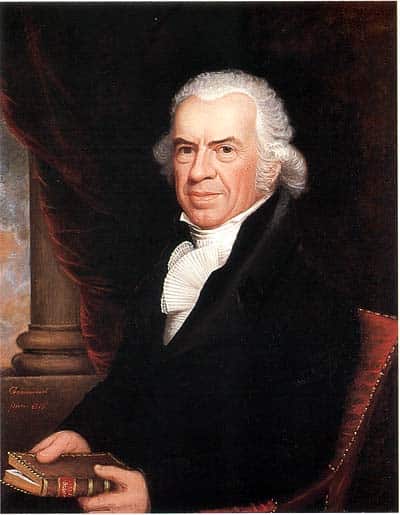
The semiquincentennial of the signing of the Declaration of Independence is an appropriate time to recognize the importance of freedom of the press in the U.S. even prior to the adoption of the U.S. Constitution and the ratification of the First Amendment. The works of Thomas Paine and Benjamin Franklin are well known, but there were many other writers and printers who contributed to the patriot cause and set precedents that continue to resonate in the 21st century.
Thomas’s life and journalistic endeavors
One of these figures was Isaiah Thomas (1749-1831). Apprenticed to a printer at the tender age of six, Thomas quickly became proficient at his trade. After working for several printers in different colonies, he set up his own press in Boston in 1770 and began printing a weekly newspaper, the Massachusetts Spy, under the motto, “Open to all parties, but influenced by none.” In 1774, it published appeals from slaves for their freedom.
Like many other publications of the period, the magazine took a strong stance on behalf of the patriots, and for a time sported a picture of a snake (symbolizing the colonies) facing off against a dragon (symbolizing the British). Thomas’s print shop became a gathering place for the Sons of Liberty, and after Governor Thomas Hutchinson tried to prosecute Thomas, a local grand jury refused to indict him.
Learning that the British were nonetheless planning to close his press and try him for treason, Thomas left Boston under cover of darkness with his printing press on April 16, 1775, and was three days later among the militiamen who engaged with British troops at Lexington and Concord. From the press he had moved to Worcester, he published the first account of this battle. Although evidence is sketchy, he is also said to have been the first publicly to read the Declaration of Independence in front of a crowd in New England.
Thomas’s other achievements
Although the Thomas’s business, which was forced to move several times, did not particularly flourish during the Revolutionary War, he went on to publish more than 250 book titles including a variety of illustrated children’s books including A Curious Hieroglyphick Bible. In 1810, he also published The History of Printing in America, and he founded the predecessor of today’s American Antiquarian Society, to which he donated his collection of more than 8,000 publications.
As Americans considered the ratification of the Constitution that a convention had proposed in 1787 and whether it should include a bill of rights, the example of Thomas and other publishers would have highlighted the importance of freedom of the press for those who were concerned about resisting arbitrary governmental powers.
John R. Vile is a political science professor and dean of the Honors College at Middle Tennessee State University.