
The speech and debate clause, which appears in Article 1, Section 6, of the U.S. Constitution, was written before the First Amendment and has a more limited scope.
The clause, whose inclusion reflected the development in England of an independent Parliament, states that “for any Speech or Debate in either House, they [members] shall not be questioned in any other Place.” It follows a provision, now largely moot, that prevents the arrest, for civil cases, of members traveling to or from sessions of Congress.
Speech and debate clause protects legislative speech
The general purpose of the speech and debate clause is to protect members of Congress from having to worry that anything they say in the course of legislative activities will implicate them in a lawsuit.
In United States v. Brewster, 408 U.S. 502 (1972), the Supreme Court distinguished between “purely legislative activities,” which the Speech and Debate Clause protected, and merely political activities, which it did not.
In Gravel v. United States (1972), the Supreme Court extended the privilege to legislative aides regarding legislative acts. The case arose after an aide to Sen. Mike Gravel of Alaska was subpoenaed to testify before a grand jury that was investigating the senator's possible arrangement for private publication of the Pentagon Papers. Gravel read extensively from the material during a Senate subcommittee meeting on June 29, 1971, and then placed the entire 47 volumes into the public record. Press reports later indicated Gravel had arranged for them to be published by Beacon Press. Gravel intervened to quash the subpoena of his aide, Leonard S. Rodberg, based on the protections of the speech and debate clause. The Supreme Court ruled that the speech and debate clause did protect congressional aides from being questioned regarding legislative acts, but refused to extend the privilege to activity related to the private publication of materials.
In 1975, in Eastland v. U.S. Servicemen's Fund, the Supreme Court found that the speech and debate clause protected Sen. James Eastland of Mississippi and members of his Senate Subcommittee on Internal Security against a lawsuit that argued that the committee's subpoena for bank records of an organization was designed to suppress the members of the organization's First Amendment speech rights.
Court: Speech and debate clause does not cover newsletter comments
In Hutchinson v. Proxmire (1979), the Court permitted a defamation suit against a senator for derogatory comments made in a newsletter and in forums other than the Senate floor.
In Office of Senator Dayton v. Hanson (2007), the Court ruled that lower courts did not have jurisdiction in a claim against a U.S. senator’s office by a former employee. The senator’s office had sought immunity under the speech and debate clause.
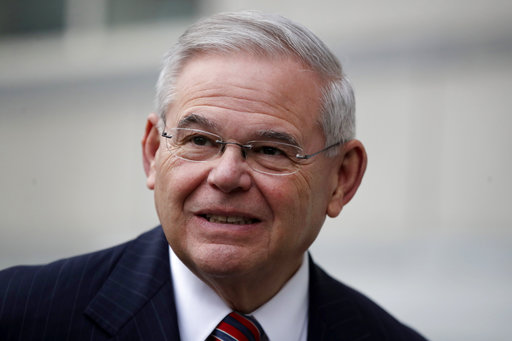
U.S. Sen. Bob Menendez of New Jersey sought to use the speech and debate clause to shield himself from bribery and allegation charges. Courts ruled against him, however at his trial, a judge excluded some evidence based on the clause. Even without the evidence, Menendez was convicted.
Judge allows some evidence excluded in Menendez trial
U.S. Senator Bob Menendez from New Jersey in 2017 sought to use the speech and debate clause to shield himself from allegations of bribery and public corruption. However, lower courts ruled that his lobbying activities on behalf of particular clients are not protected, and the Supreme Court decided not to review the case.
In Menendez's 2024 trial, the judge, however, on the basis of the Speech and Debate Clause, excluded some evidence that the prosecution thought was critical. The judge did so in party by relying on a ruling in a previous case, United States v. Helstoski, 442 U.S. 477 (1979), against allowing certain evidence against Rep. Henry Helstoski, who had also been accused of bribery. Menendez was, however, was convicted in 2024 and sentenced to 11 years in jail in 2025.
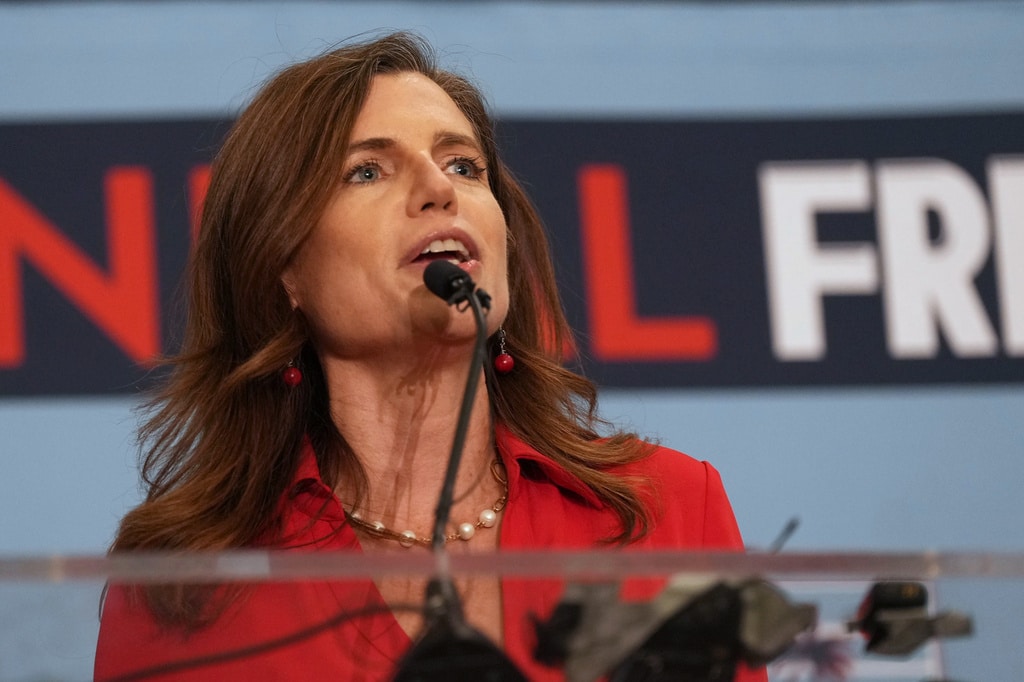
Speech and debate clause protected Nancy Mace's accusations made on House floor of sexual assaults
On Feb. 10, 2025, Representative Nancy Mace, a Republican from South Carolina who had made other accusations of sexual assaults, delivered an unprecedented speech on the floor of the House of Representatives alleging that four men, including a former fiancé, had drugged and raped her and other women and taken pictures of them in the nude without their consent.
Her speech of about an hour indicated that the men had booked themselves “a one-way ticket to hell” (Karni 2025). Her fiancé denied her accusation, for which she did not provide evidence in her speech. The South Carolina Attorney General, whom Mace accused of treating female victims as criminals, likewise denied having been informed of any such charges.
One of the men sued Mace for defamation, but a judge dismissed the suit saying citing both the Speech and Debate Clause.
John Vile is a professor of political science and dean of the Honors College at Middle Tennessee State University. He is co-editor of the Encyclopedia of the First Amendment. This article was originally published in 2009.