
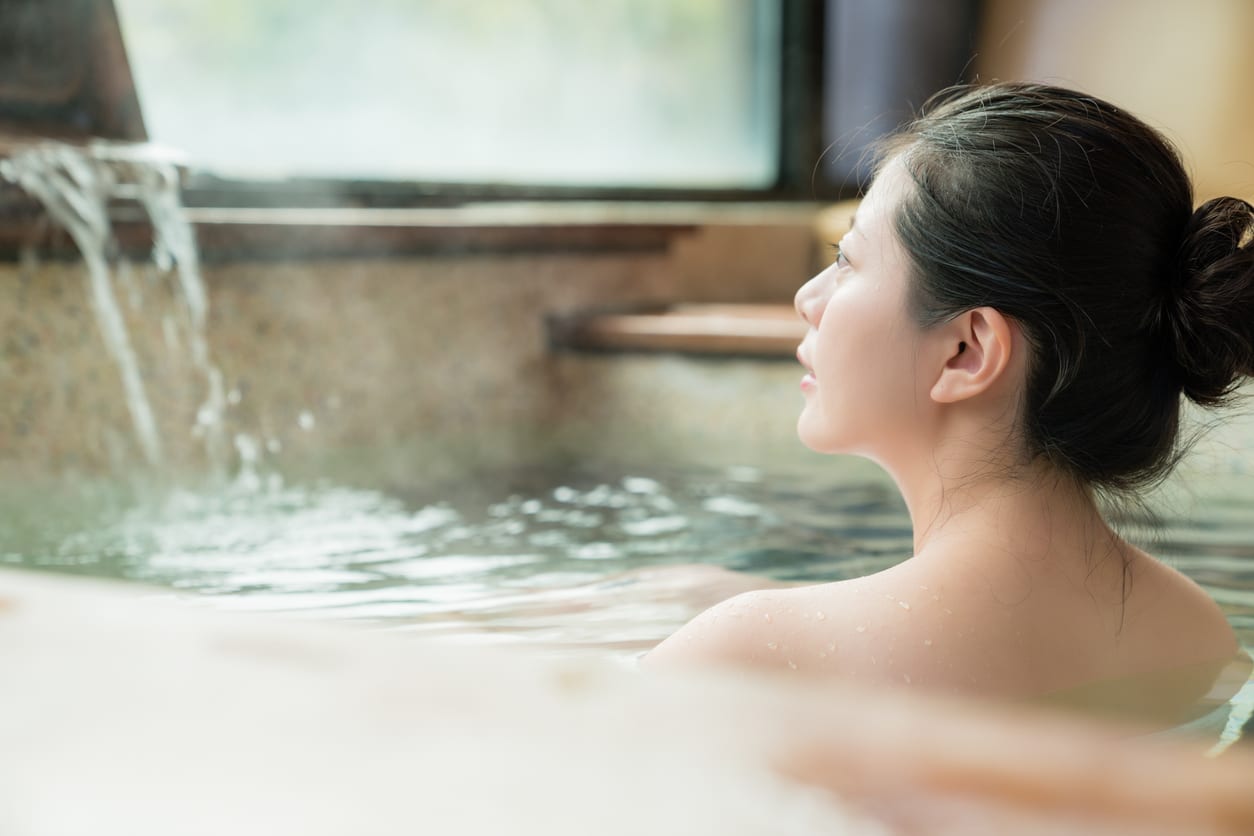
One of the more fascinating cases that is being appealed to the U.S. Supreme Court is a case involving two Korean spas operated in Washington state by Myoon Woon Lee. He is appealing a judgment by Washington’s Human Rights Commission that he has violated the Washington Law Against Discrimination by attempting to exclude transgender individuals who have not yet received gender confirmation surgery affecting their genitalia from an all-nude spa that is only open to biological women or cis-gender males who have undergone such surgery.
After a district court dismissed the complaint, the U.S. 9th Circuit Court of Appeals affirmed in a decision rejecting arguments that the spas were exercising First Amendment rights of freedom of speech, the free exercise of religion, and freedom of association.
The law in question
The majority opinion was authored by Judge M. Margaret McKeown, a Clinton appointee who has been serving on the Court since 1998. The Court cited the law that prohibited discrimination based on “race, creed, color, national origin, citizenship or immigration status, sex,” including such discrimination that would bar the “full enjoyment of any of the accommodations, advantages, facilities, or privileges of any place of public resort, accommodation, assemblage, or amusement.”
An amendment to the law prohibited discrimination based on “sexual orientation” explaining that it applied to “heterosexuality, homosexuality, bisexuality, and gender expression or identity.” It did permit “the maintenance of certain ‘gender-segregated facilities,’ such as ‘restrooms, locker rooms, dressing rooms,’ and similar spaces, so long as the facility does not remove or otherwise take action against a person for reasons ‘related to their gender expression or gender identity.’”
9th Circuit majority opinion
Applying intermediate scrutiny, the court rejected the argument that the government had compelled speech by requiring the spa to affirm that it would provide equal access “for all customers ‘without regard to . . . sexual orientation or gender identity.’” It believed the law regulated conduct rather than speech and that any “incidental restriction” on speech was “no greater than is essential to eliminate discriminatory conduct.”
The spas’ owners argued that they had excluded biological men from the spa on the basis of their Christian faith that opposed “the mixing of nude persons of the opposite sex who are not married to one another.” Citing Employment Division, Department of Human Resources v. Smith (1990), the Court drew a sharp line between the protection of religious belief and action and required only a rational basis to neutral and generally applicable laws that only incidentally burdened religion. The Court distinguished this case from the decision in Masterpiece Cakeshop v. Colorado Civil Rights Commission (2018), where the Court had found hostility toward the religious beliefs of the business owner.
In addressing the arguments from freedom of association, the Court denied that the spa was a place of “intimate association.” Recognizing legitimate “private concerns,” the court said that “nudity alone does not transform a public place or business into an intimate association.”
9th Circuit Dissenting opinion
Korean-born Judge Kenneth Kiul Lee, a Trump appointee, authored the dissent. He believed that the law that had been applied in this case “was enacted to safeguard women’s rights” and “does not cover transgender status.” He thought that the Commission should have been more accommodating to “members of a racial minority group who want to share their cultural heritage and provide a safe space for women and girls.” He further noted that the Commission had acted on the basis of a single complaint by an individual who had provided no evidence of ever having sought to visit the spa. He believed that the Court’s reading of the law “defied common sense statutory rules of construction, and the state’s own reading of the statue.”
The judge also objected to what he thought had been an overzealous prosecution of an immigrant whose family had come to the US. In part to secure religious freedom and who was trying to provide service to the women and girls of the state. He cited laws that protected the privacy of females in shared bathrooms and other common areas” and the likelihood that a change in policy would result in the loss of clients. Claiming that the case was about “power,” he pointed to past discrimination against Asians in the state.
Future of the case
As the dissent makes clear, if the U.S. Supreme Court takes this case, it could well base its decision on perceived animus against the Korean owners and their beliefs, on the privacy rights of customers, or on other grounds.
If it were to address First Amendment issues, it might decide that the lower courts had drawn an unduly bright line between protections of religious belief and religious practice (the First Amendment specifically refers to free exercise of religion) that should be subjected to heightened scrutiny. It might also elevate First Amendment associational rights by putting greater emphasis on the fact that all customers were completely naked throughout the spa treatments. If this were a case involving federal law, or if such a federal law were involved, the Court might also question the lower courts’ interpretation of the relevant statues.
John R. Vile is a political science professor and dean of the Honors College at Middle Tennessee State University.