
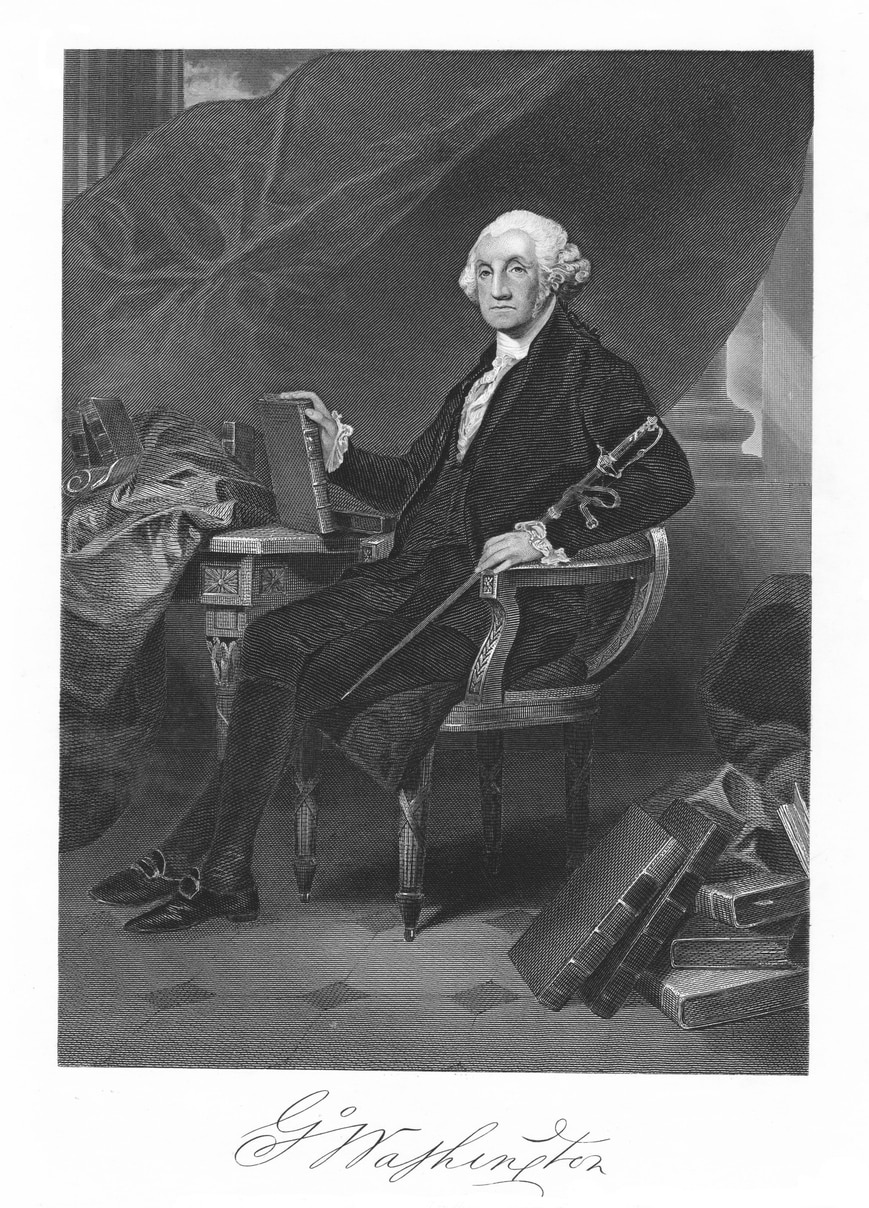
One of the strongest affirmations of religious rights America is a letter that President George Washington wrote to a Jewish congregation in Newport, Rhode Island, on Aug. 21, 1790. He was responding to a letter that the congregation of the Touro synagogue had addressed to him and that had been signed by its warden Moses Seixas four days earlier. This exchange of letters is particularly significant because it preceded the ratification of the First Amendment with its guarantee of the free exercise of religion the following year.
Reason for Washington’s visit to Rhode Island
The U.S. Constitution had gone into effect in 1789 before the states of Rhode Island, which had not sent delegates to the Constitutional Convention of 1787, and North Carolina had ratified the document. Washington was visiting Rhode Island to celebrate its ratification, as he would visit North Carolina the following year.
Although there were relatively few Jews in America, many of them had espoused the Patriot cause and served in the Patriot army led by Washington, who promoted them regardless of their religion or ethnicity. Under British laws, some of which were incorporated into early state constitutions, Jews and others who did not affirm the validity of the New Testament, the Trinity, and other Christian doctrines, were denied the right to vote and to hold public office, but they had hoped that their contribution to the Revolution would given them a higher status in the U.S.
Letter from Jewish congregation to Washington
As Washington visited Rhode Island, Seixas wrote the letter on behalf of “the children of the stock of Abraham.” He expressed the view that God had preserved Washington as he had protected David and Daniel of Hebrew scriptures. He also wished Washington a long life like that of the biblical Joshua and admission “into the Heavenly Paradise to partake of the water of life, and the tree of immortality.”
Reflecting Jewish concern over their place in the new nation, Seixas observed that that American Jews had been “deprived ... of “the invaluable rights of free Citizens.” However, he also expressed the hope that the new government would give “to bigotry ... no sanction, to persecution no assistance” and that it would generously afford “to all Liberty of conscience, and immunities of Citizenship: — deeming every one, of whatever Nation, tongue, or language equal parts of the great governmental Machine.”
Washington’s response in affirmation of freedom of religion
Washington’s response expressed his appreciation for his welcome. As chief executive, he also affirmed that “All possess alike liberty of conscience and immunities of citizenship.”
Whereas many European nations had extended “toleration” to Jews living among them, Washington, drawing from some of Seixas’ own words, said that “It is now no more that toleration is spoken of as if it were the indulgence of one class of people that another enjoyed the exercise of their inherent natural rights, for, happily, the Government of the United States, which gives to bigotry no sanction, to persecution no assistance, requires only that they who live under its protection should demean themselves as good citizens in giving it on all occasions their effectual support.”
Adding one of his favorite metaphors, Washington continued: “May the children of the stock of Abraham who dwell in this land continue to merit and enjoy the good will of the other inhabitants — while everyone shall sit in safety under his own vine and fig tree and there should be none to make him afraid.”
Importance of Washington’s letter
Adam Jortner sees this letter as an important milestone in the recognition of Jewish citizenship and religious freedom in America, even before the adoption of the First Amendment. He notes that early Jewish congregations did not have rabbis and often adopted democratic forms of government. Like Protestant counterparts, many Jewish congregations split over matters of ritual and doctrine. Philadelphia became a major hub of Jewish life as individuals from other cities occupied by the British during the Revolutionary War migrated there.
The Philadelphia congregation supplied many of the leaders for other congregations that developed as the nation grew. Over time, states with significant Jewish populations dropped religious test oaths that would limit their participation in government.
John R. Vile is a political science professor and dean of the Honors College at Middle Tennessee State University.