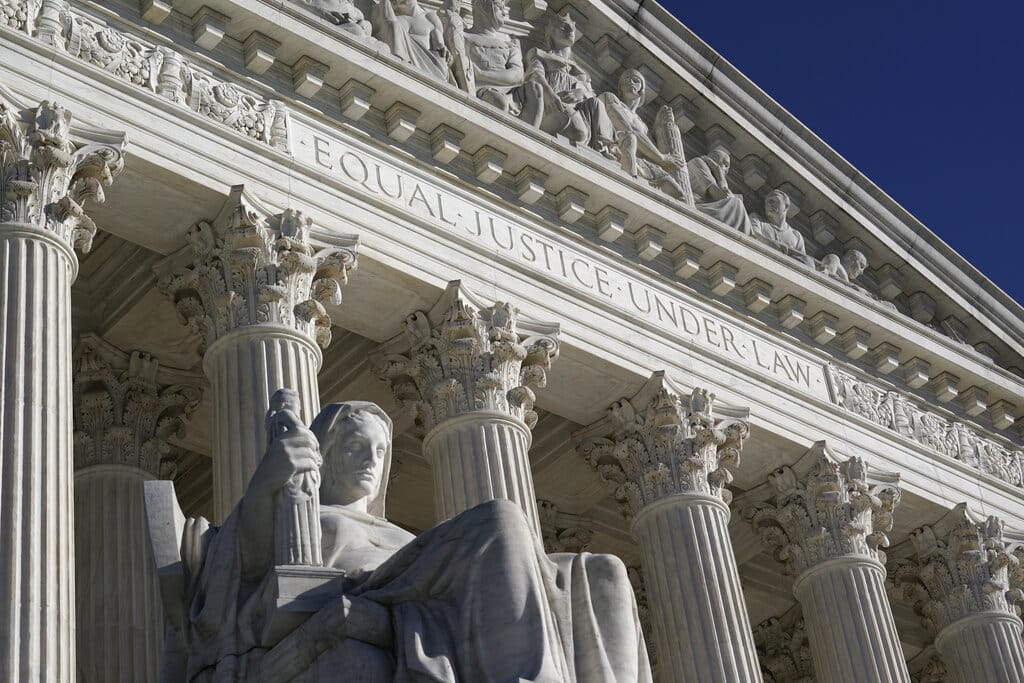
AUSTIN, Texas (AP) — The U.S. Supreme Court on Dec. 8 declined to hear an appeal on a Texas free-speech case that allowed local officials to remove books deemed objectionable from public libraries.
The case stemmed from a 2022 lawsuit by a group of residents in rural Llano County over the removal from the public library of more than a dozen books dealing with sex, race and gender themes, as well as humorously touching on topics such as flatulence.
A lower federal appeals court had ruled that removing the books did not violate constitutional free-speech protections.
The case had been closely watched by publishers and librarians across the country. The Supreme Court’s decision not to consider the case was criticized by free-speech groups.
The Texas case has already been used to ban books in other areas of the country, said Elly Brinkley, staff attorney for U.S. Free Expression Programs at PEN America.
“Leaving the Fifth Circuit’s ruling in place erodes the most elemental principles of free speech and allows state and local governments to exert ideological control over the people with impunity. The government has no place telling people what they can and cannot read,” Brinkley said.
Sam Helmick, president of the American Library Association, said the Supreme Court’s decision not to hear the case “threatens to transform government libraries into centers for indoctrination instead of protecting them as centers of open inquiry, undermining the First Amendment right to read unfettered by viewpoint-based censorship.”
The Texas case began when a group of residents asked the county library commission to remove the group of books from circulation. The local commission ordered librarians to comply and a separate group of residents sued to keep the books on the shelves.
Llano County, about 75 miles northwest of the Texas capital of Austin, has a population of about 20,000. It is mostly white and conservative, with deep ties to agriculture and deer hunting.
The book titles originally ordered removed included, Caste: The Origins of Our Discontent, by Isabel Wilkerson; They Called Themselves the K.K.K: The Birth of an American Terrorist Group, by Susan Campbell Bartoletti; In the Night Kitchen, by Maurice Sendak; It’s Perfectly Normal: Changing Bodies, Growing Up, Sex and Sexual Health, by Robie H. Harris; and Being Jazz: My Life as a (Transgender) Teen, by Jazz Jennings.
Other titles include Larry the Farting Leprechaun, by Jane Bexley, and My Butt is So Noisy!, by Dawn McMillan.
A federal judge ordered the county to restore some of the books in 2023, but that decision was reversed earlier this year by the 5th U.S. Circuit Court of Appeals, which covers Texas, Louisiana and Mississippi.
The county at one point briefly considered closing its public libraries rather than return the books to the shelves after the federal judge’s initial order.
In its order on May 23, the appeals court’s majority opinion said the decision to remove a book from the library shelf is not a book ban.
“No one is banning (or burning books). If a disappointed patron can’t find a book in the library, he can order it online, buy it from a bookstore or borrow it from a friend,” the appeals court opinion said.
Llano County Judge Ron Cunningham, the ranking official in the county, did not respond to an email to his office seeking comment.
Hillel Italie contributed to this story from New York City.
See also: Book Banning
What is book banning? And what isn’t?
The Free Speech Center newsletter offers a digest of First Amendment and news-media news every other week. Subscribe for free here: https://bit.ly/3kG9uiJ