
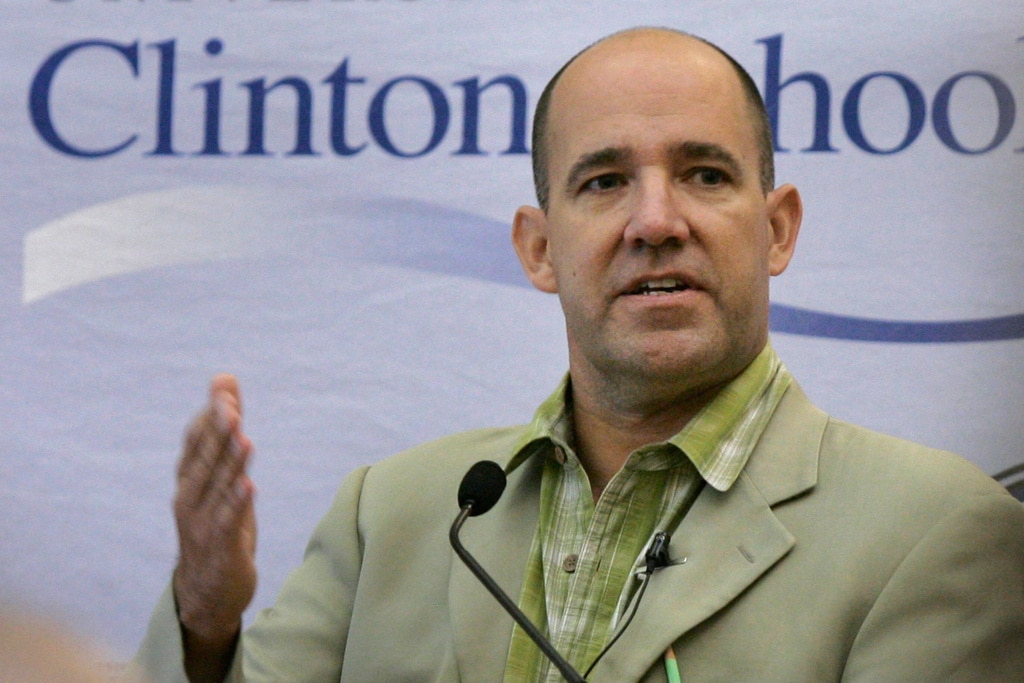
NEW YORK (AP) — Matthew Dowd opened a floodgate.
The MSNBC political analyst, who lost his job shortly after on-air comments about conservative activist Charlie Kirk’s Sept. 10 assassination, was the first of many figures to face consequences Sept. 11 for public statements or actions about the shooting.
Indeed, raw feelings about the killing have ignited a campaign to shame — and more. Several conservative activists sought to identify social media users whose posts about Kirk they viewed as offensive or celebratory. Right-wing influencer Laura Loomer said she would try to ruin the professional aspirations of anyone who celebrated Kirk’s death.
MSNBC said Dowd is no longer with the network after his comments, shortly after the shooting, about “hateful words” leading to “hateful actions.” Both MSNBC President Rebecca Kutler and Dowd apologized for the remarks, which Kutler called “inappropriate, insensitive and unacceptable.”
Dowd said he didn’t intend for his comments to blame Kirk for the attack. Still, it brought an abrupt interruption to his work as a television commentator, which the former aide to President George W. Bush has done for nearly two decades.
Actions spread across country, from Miss. to Ariz.
A Florida reporter was suspended for a question posed to a congressman. A comic-book writer lost her job because of social media posts, as did educators in Mississippi and Tennessee. “CBS Mornings” host Nate Burleson was assailed for a question. An Arizona sports reporter and a Carolina Panthers public relations official both lost their jobs.
An anonymously registered website pledged to “Expose Charlie’s Murderers” and asked people to offer tips about people who were “supporting political violence online.”
The site published a running list Sept. 11 of targeted posts, along with the names, locations and employers of people who posted them. While some posts contained incendiary language, others didn’t appear to celebrate the shooting or glorify violence. There were several similar efforts, including one by activist Scott Presler, who asked his followers about teachers who supposedly celebrated Kirk’s assassination, and posted findings on X.
A staff member at the University of Mississippi was fired after sharing “insensitive comments” about Kirk’s death, according to the school’s chancellor, Glenn Boyce. The university did not identify the employee or respond to questions from The Associated Press.
The president of Middle Tennessee State University said he’d fired a staffer who offered “callous and inappropriate comments on social media” about the assassination. President Sidney A. McPhee did not identify the staff member but said the person “worked in a position of trust with our students.” An X post by Tennessee GOP Sen. Marsha Blackburn later identified an assistant dean of students at MTSU who posted online that she had “ZERO sympathy” following the shooting. Blackburn said the person should be ashamed and fired. On its website, MTSU later identified the dean as Laura Sosh-Lightsy, according to USA Today.
A warning to teachers in Fla.
Florida Gov. Ron DeSantis’ education commissioner warned the state’s teachers that making “disgusting” statements about Kirk’s assassination could draw sanctions, including the suspension or revocation of their teaching licenses. Commissioner Anastasios Kamoutsas said in a memo to school district superintendents that he’d been made aware of “despicable” comments on social media.
“I will be conducting an investigation of every educator who engages in this vile, sanctionable behavior,” Kamoutsas said in the memo, which he also posted on X on Sept. 11. “Govern yourselves accordingly.”
The rush to police commentary appeared to have little precedent in other recent examples of political violence, such as the 2022 attack on Paul Pelosi, husband of then-House Speaker Nancy Pelosi, or the shooting deaths earlier this year former Minnesota House Speaker Melissa Hortman, a Democrat, and her husband Mark. But no widespread celebrations of those acts were reported.
DC Comics announced that it was ditching a new “Red Hood” series, a Batman spinoff, after one issue had been published and two more were in the works. The comics’ writer, Gretchen Felker-Martin, had published comments about Kirk’s shooting online that DC called offensive.
“Posts or public comments that can be viewed as promoting hostility or violence are inconsistent with DC’s standards of conduct,” the comics publisher said.
Loomer, whose pressure campaigns have resulted in several Trump administration firings, attacked the entertainment website TMZ for what she called a “disgusting” livestream where employees could be heard laughing and cheering seconds before Kirk’s death was announced. TMZ said the noise had nothing to do with the Kirk story — the staff members were crowded around a computer watching a car chase — but apologized for the bad timing and how it looked to viewers.
A writer for the Arizona media company PHNX Sports was fired after conservative activists called attention to a series of online posts that attacked Kirk’s positions on guns and Gaza and called him evil.
The NFL’s Panthers distanced themselves from an employee who posted comments about Kirk and a photo referencing Wu-Tang Clan’s song “Protect Ya Neck.” Kirk was shot in the neck. Football communications coordinator Charlie Rock was fired, according to a team source.
Rock’s name has been removed from the team’s website. He did not return messages seeking comment.
Football star turned CBS News anchor under attack
Burleson, a former football star turned anchor for CBS News’ morning show, was attacked online for asking former House Speaker Kevin McCarthy on the air Thursday whether this was a moment for the Republican party to reflect on political violence. His co-anchor, Gayle King, immediately tried to soften the question by interjecting, “I’d say both parties.”
Another former NFL player, Jay Feely, running for Congress in Arizona, said the question was offensive. “Charlie Kirk was assassinated in front of his family and you ask if Republicans need to tone down their rhetoric?” he said. (Kirk’s family was not present at the shooting.) Some conservative media stars also weighed in, with talk show host Erick Erickson calling for Burleson to be fired and Clay Travis calling him a “moron.”
A reporter for the Floridapolitics.com news site was suspended for texting a Florida congressman a question about gun control immediately after Kirk’s shooting. Peter Schorsch, Floridapolitics.com publisher, said he was concerned that reporter A.G. Gancarski was trying to provoke a source rather than initiate a serious policy discussion.
U.S. Rep. Randy Fine, a Florida Republican, texted back that he had learned of Kirk’s shooting only 23 minutes earlier and was repulsed to get the question when people should be praying for Kirk’s safety. Schorsch said he agreed that the timing was inappropriate, and didn’t want any of his staff members to be put in danger by anyone angry about it.
“I think everybody today should be asking questions about a wide range of policies,” Schorsch said in an interview Thursday. “But when a house is on fire, I don’t think you should ask questions about a person’s insurance policy. You put out the fire first.”
He said Gancarski was a good reporter who had made a mistake. He’ll be back on the job after a few days out. Gancarski, reached by phone, declined comment.
The feminist website Jezebel removed a post headlined “We Paid Some Etsy Witches to Curse Charlie Kirk” that was published Sept. 8, two days before Kirk’s death. “The piece was intended as satire and made it absolutely clear that we wished no physical harm. We stand by every word,” Jezebel said in an editor’s note.
“We may republish at a later date, but out of compassion for the victim’s family, we want to make clear that we prioritize an end to violence over anyone wanting to read about Etsy witches,” Jezebel said, in a reference to the online storefront.
Worker rights vs. employer rights
It’s far from the first time workers have lost their jobs over things they say publicly — including in social media posts. But the speed at which the firings have been happening raises questions about worker rights versus employer rights.
In the U.S., laws can vary across states, but overall, there are few legal protections for employees who are punished for speech made both in and out of private workplaces.
“Most people think they have a right to free speech … but that doesn’t necessarily apply in the workplace,” said Vanessa Matsis-McCready, associate general counsel and vice president of HR Services for Engage PEO. “Most employees in the private sector do not have any protections for that type of speech at work.”
Add to that the prevalence of social media, which has made it increasingly common to track employees’ conduct outside of work and to dox people, or publish information about them online with the intent of harming or harassing them.
Employers have a lot of leeway
Protections for workers vary from one state to the next. For example, in New York, if an employee is participating in a weekend political protest, but not associating himself with the organization that employs them, their employer cannot fire them for that activity when they return to work.
But if that same employee is at a company event on a weekend and talks about her political viewpoints in a way that makes others feel unsafe or the target of discrimination or harassment, the employee could face consequences at work, Matsis-McCready said.
Most of the U.S. defaults to “at-will” employment law — which essentially means employers can choose to hire and fire as they see fit, including over employees’ speech.
“The First Amendment does not apply in private workplaces to protect employees’ speech,” said Andrew Kragie, an attorney who specializes in employment and labor law at Maynard Nexsen. “It actually does protect employers’ right to make decisions about employees, based on employees’ speech.”
Kragie said there are “pockets of protection” around the U.S. under various state laws, such as statutes that forbid punishing workers for their political views. But the interpretation of how that gets enforced changes, he notes, making the waters murky.
Steven T. Collis, a law professor at the University of Texas at Austin and faculty director of the school’s Bech-Loughlin First Amendment Center, also points to some state laws that say employers can’t fire their workers for “legal off duty conduct.” But there’s often an exception for conduct seen as disruptive to an employer’s business or reputation, which could be grounds to fire someone over public comments or social media posts.
“In this scenario, if somebody feels like one of their employees has done something that suggests they are glorifying or celebrating a murder, an employer might still be able to fire them even with one of those laws on the books,” Collis said.
For public employees, which can range from school teachers and postal workers to elected officials, the process is a bit different. That’s because the First Amendment plays a unique role when the government is the employer, Collis explained. The Supreme Court has ruled that if an employee is acting in a private capacity but speaking on a matter of public concern, he or she could be protected. Still, he noted that government employers can discipline a worker if they determine such conduct will interfere with the government’s ability to do its job.
From two U.S. Supreme Court cases concerning public employees, there developed a legal test, the Pickering-Connick test, which is used by courts to determine whether a public employer violated an employee’s free-expression rights. The test has two parts. The first asks whether a public employee spoke on a matter of public concern defined as a matter of larger societal importance. If so, then the court proceeds to the second part of the test, often called the balancing prong. Under this prong, the court must balance the employee’s right to free speech against the employer’s interests in an efficient, disruptive-free workplace.
Some in the public sector have already worked to restrict speech in the aftermath of Kirk’s death. For instance, leaders at the Pentagon unveiled a “zero tolerance” policy for any posts or comments from troops that make light of or celebrate the killing of Kirk.
The policy, announced by the Pentagon’s top spokesman Sean Parnell on social media Sept. 11, came hours after numerous conservative military influencers and activists began forwarding posts they considered problematic to Parnell and his boss, defense secretary Pete Hegseth.
“It is unacceptable for military personnel and Department of War civilians to celebrate or mock the assassination of a fellow American,” Parnell wrote Thursday.
A surge of political debate
The ubiquity of social media is making it easier than ever to share opinions about politics and major news events as they’re unfolding. But posting on social media leaves a record, and in times of escalating political polarization, those declarations can be seen as damaging to the reputation of an individual or their employer.
“People don’t realize when they’re on social media, it is the town square,” said Amy Dufrane, CEO of the Human Resource Certification Institute. “They’re not having a private conversation with the neighbor over the fence. They’re really broadcasting their views.”
Political debates are certainly not limited to social media and are increasingly making their way into the workplace as well.
“The gamification of the way we communicate in the workplace, Slack and Teams, chat and all these things, they’re very similar to how you might interact on Instagram or other social media, so I do think that makes it feel a little less formal and somebody might be more inclined to take to take a step and say, ‘Oh, I can’t believe this happened,’” Matsis-McCready said.
Employers are not ready
In the tense, divided climate of the United States, many human-resource professionals have expressed that they’re unprepared to address politically charged discussions in the workplace, according to the Human Resource Certification Institute. But those conversations are going to happen, so employers need to set policies about what is acceptable or unacceptable workplace conduct, Dufrane said.
“HR has got to really drill down and make sure that they’re super clear on their policies and practices and communicating to their employees on what are their responsibilities as an employee of the organization,” Dufrane said.
Many employers are reviewing their policies on political speech and providing training about what appropriate conduct looks like, both inside and outside the organization, she said. And the brutal nature of Kirk’s killing may have led some of them to react more strongly in the days that followed his death.
“Because of the violent nature of what some political discussion is now about, I think there is a real concern from employers that they want to keep the workplace safe and that they’re being extra vigilant about anything that could be viewed as a threat, which is their duty,” Matsis-McCreedy said.
Employees can also be seen as ambassadors of a company’s brand, and their political speech can dilute that brand and hurt its reputation, depending on what is being said and how it is being received. That is leading more companies to act on what employees are saying online, she said.
“Some of the individuals that had posted and their posts went viral, all of a sudden the phone lines of their employers were just nonstop calls complaining,” Matsis-McCready said.
Still, experts such as Collis don’t anticipate a significant change in how employers monitor their workers speech — noting that online activity has come under the spotlight for at least the last 15 years.
“Employers are already, and have been for a very long time, vetting employees based on what they’re posting on social media,” he said.
AP journalists Sophie Bates, Kate Payne, Steve Reed, Nicholas Riccardi and Konstantin Toropin contributed to this report. The Free Speech Center also contributed.
The Free Speech Center newsletter offers a digest of First Amendment and news-media news every other week. Subscribe for free here: https://bit.ly/3kG9uiJ