
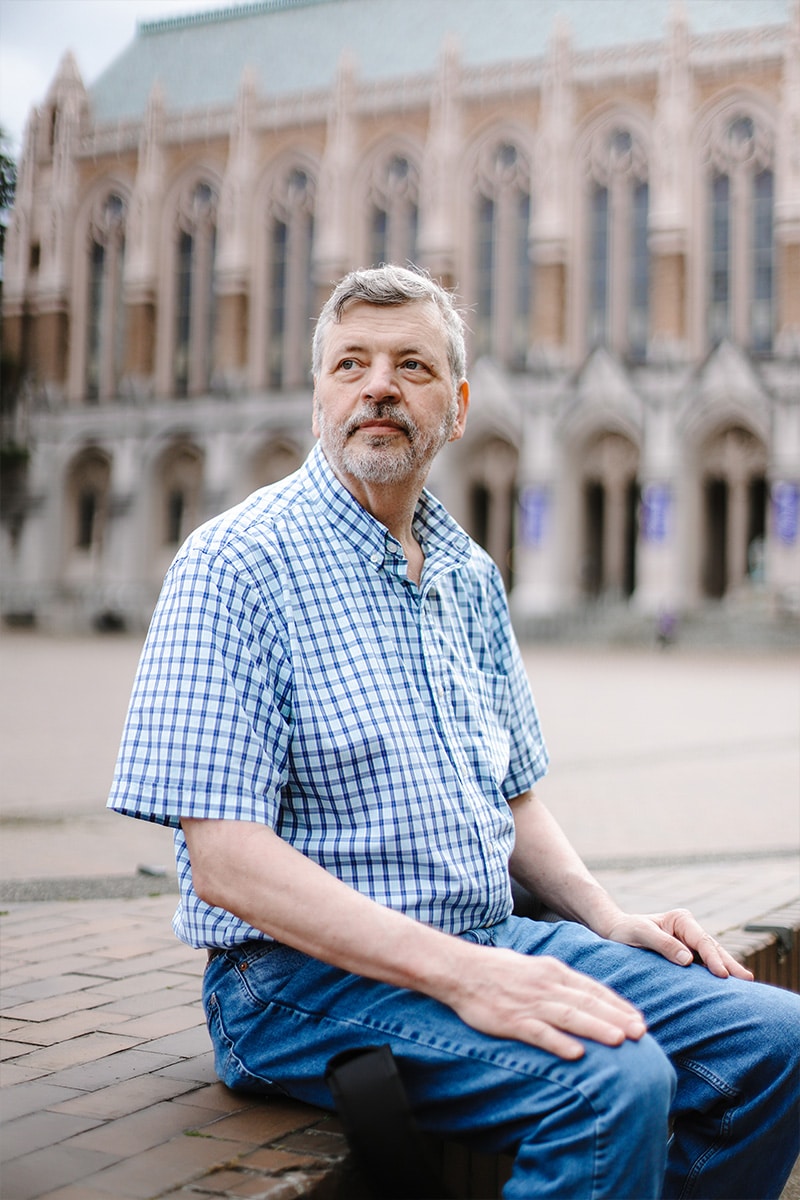
This case involves a judgment in favor of Stuart Reges, a computer science professor at the University of Washington, that stressed the importance of academic freedom.
Facts and trial court decision
Reges had been investigated, reprimanded and threatened with further discipline by university officials after he posted a statement on his course syllabus. It had mocked the university’s model statement intended to acknowledge the university’s proposed land acknowledgment that its campus in Seattle was originally home to indigenous people who owned the land. Instead, he posted a statement saying that “I acknowledge that by the labor theory of property the Coast Saish people can claim historical ownership of almost none of the land currently occupied by the University of Washington.”
Claiming that this statement had triggered negative student responses and created a “toxic environment” in his class and interfered with the university diversity, equity and inclusion policies, administrators apologized for his statement, created an alternate section in which his students could enroll and generally subjected him to censorship. He, in turn, filed a claim against university president Magdalena Balazinska and other school officials for “First Amendment retaliation and viewpoint discrimination,” and claimed that the policies he had violated has been “facially overbroad and unconstitutionally vague.”
Citing Pickering v. Board of Education (1968), a district court decided that while Reges had spoken on a matter of public concern, the university’s interest “in mitigating disruption to university staff functions, teaching assistants and the learning environment outweighed Reges’ First Amendment interests.” It also dismissed his overbreadth and vagueness claims.
9th Circuit Court Decision
The circuit court’s opinion, which reversed the lower court, was written by Daniel Aaron Bress, who was appointed by President Donald Trump in 2019.
“The public university occupies a central place in the law of the First Amendment. The First Amendment protects the free exchange of ideas,” Bress wrote.
Citing Keyishian v. Board of Regents (1967), he noted that “the classroom is peculiarly the ‘marketplace of ideas,’” and that such freedom is “not without some costs,” including unwanted disruption. Affirming that Reges had engaged in protected speech, that the university had penalized him, and that it did so as a result of his speech, the court found that Reges’ speech interests outweighed the University of Washington’s interest in the case.
The court rejected the idea that Reges had engaged in “government speech,” which the University of Washington had the right to control. It noted that the decision in Garcetti v. Ceballos (2006), which had articulated the government speech doctrine, did not decide the issue of “speech related to scholarship or teaching.” In expressing his opinion, Reges had stimulated campus debate, had done so on the very document (a syllabus) that the university had sought to influence, and had spoken in first person (“I”) rather than on behalf of the university. Moreover, as a college professor, he had greater freedom than teachers in primary and secondary schools, which had been the subjects of other suits.
The court observed that Reges was speaking not about a private matter but about a matter of public concern, which it characterized as “core political speech.” It further noted that “the parodic manner of Reges’s speech does not detract from its First Amendment value.”
The Court further questioned the university’s belief that Reges’ speech had led to inordinate disruption. It noted that “student discomfort and anger” over the speech was an insufficient reason to censure it and that to give it inordinate weight would be to give in to a “heckler’s veto.” It also suggested that the university had presented inadequate proof that Reges’ comment had resulted in difficulties of recruiting or in student flight, questioned whether one student that it claimed had left the university even existed, and suggested that there may have been other reasons that some students left Reges’ class for a section taught by another professor. The court further agreed that the nondiscrimination and affirmative action policies that had justified university action were in fact overbroad and vague.
Dissenting Opinion
Justice Sidney R. Thomas, a Clinton appointee, wrote a dissenting opinion in which he agreed that the court should apply Pickering balancing but arguing that such balancing worked in favor of the university. He put particular emphasis on the university’s mission to educate Native American students and on the fact that Reges had alternatives other than his syllabus, for which the university had not punished him, to express his opinions. He also thought that the district court’s construction of university policy to save it from overbreadth and vagueness was reasonable and had been warranted.
Results
Ultimately, the university awarded Reges $600,000 in damages, sending the signal that the court took the case and the principle of academic freedom seriously.
John R. Vile is a political science professor and dean of the Honors College at Middle Tennessee State University.