
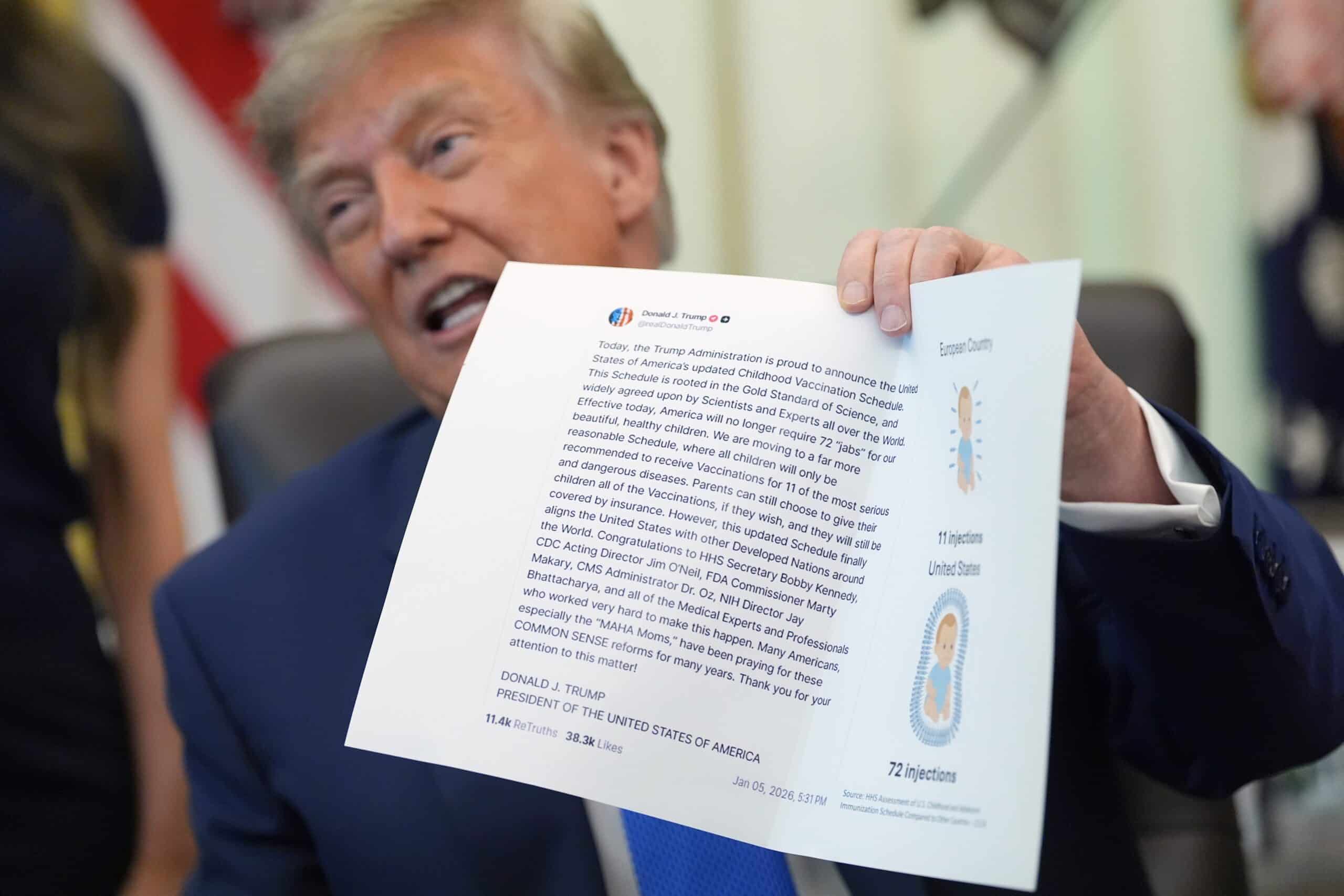
President Donald J. Trump has argued that he is one of the most transparent presidents in history, in part because of his constant use of social media. He often posts his views on Truth Social, of which he is the largest shareholder and potential financial beneficiary.
In September 2026, Trump announced that through “Truth API,” he was offering early access (six hours of lead time) to these posts, as well as special access to historical archives to companies that would pay $100,000 a month for such services.
Paying to get Truth Social posts early violates First Amendment
This has prompted a 41-page petition for a preliminary injunction by The Intercept Media, Inc. and the Freedom of the Press Foundation. They have argued that the scheme is corrupt and that it violates both the equal protection component inherent in the Fifth Amendment’s due process cause and the free press protections under the First Amendment.
The plaintiffs point out that, with the aid of Natalie Harp and Daniel Scavino who are employed by the White House Office and Executive Office of the President, Trump has posted about 11,000 posts and reposts on Truth Social, many of which “are announcements of official government policy.”
The plaintiffs, who say that they cannot afford to pay for this service, which might, in any case, undermine their reputation for “fairness and journalistic opportunity,” argue that requiring payments will cause them irreparable financial harm.
Lawsuit: Truth Social is a public forum
The plaintiffs contend that the First Amendment protects their “rights to receive pubic, newsworthy information.” They add that “once the government chooses to publish information’ to either the general public or to some members of the press, the First Amendment restricts the government’s ability to selective regulate . . . access.’”
The plaintiff contend that there is no legitimate government interest “in allowing the President to personally profit by selling early access to official government announcements.” They note that “Congress has criminalized similar conduct,” which the U.S. Constitution had discouraged through the Foreign and Domestic Emoluments Clause. The plaintiffs observe that the scheme is not narrowly tailored, since the fee is not paid to the government but to Trump’s own company, and that the scheme did not provide alternate early channels to secure posted information.
The plaintiffs further argue that Truth Social posts constitute a public forum, which should be equally open to all media, and that the imposition of a fee constitutes an unconstitutional condition, which acts to coerce newsgathering entities
The plaintiffs said that the fees granting preferential press access to those with the ability and inclination to pay do not even meet the minimum rationality standard and that the posting of official announcements on Truth Social and Trump’s participation in this scheme were a form of state action, making them subject to First Amendment restrictions.
Restrictions have chilling effect, cause harm to press unwilling to pay
The plaintiffs point to cases that indicate that any restrictions upon First Amendment rights constituted an irreparable harm and would have a chilling effect on other news outlets. They raised the additional argument that “Truth API’s restrictions on external archiving and scraping creates a substantial risk that Presidential records generated on Truth Social will not be preserved as required by law and could be “’lost forever to history” and later inaccessible to Plaintiffs” through the Freedom of Information Act.
The plaintiffs further argue that the doctrine of separation of powers did not bar courts from issuing “injunctive and declaratory relieve against the President for his official acts.”
It is possible that the early access offered would also be in violation of insider trading laws, that penalize individuals from profiting from information prior to its official release.
John R. Vile is a political science professor and dean of the Honors College at Middle Tennessee State University.