
Although the provisions for freedom of speech and press in the First Amendment remain primary and have been applied to the states via the due process clause of the 14th Amendment, the Speech and Debate clause in Article I, Section 6 of the Constitution further links these protections to representative government.
This clause provides that members of Congress “shall not be questioned in any other Place” for “any Speech or Debate in either house.” The case of Gravel v. United States, 4-08 U.S. 606 (1972), remains one of the most prominent cases that deal with this provision. The decision extended protection to congressional aides under the clause but only for what it considered to be legislative functions.
Investigation into how Gravel got Pentagon Papers
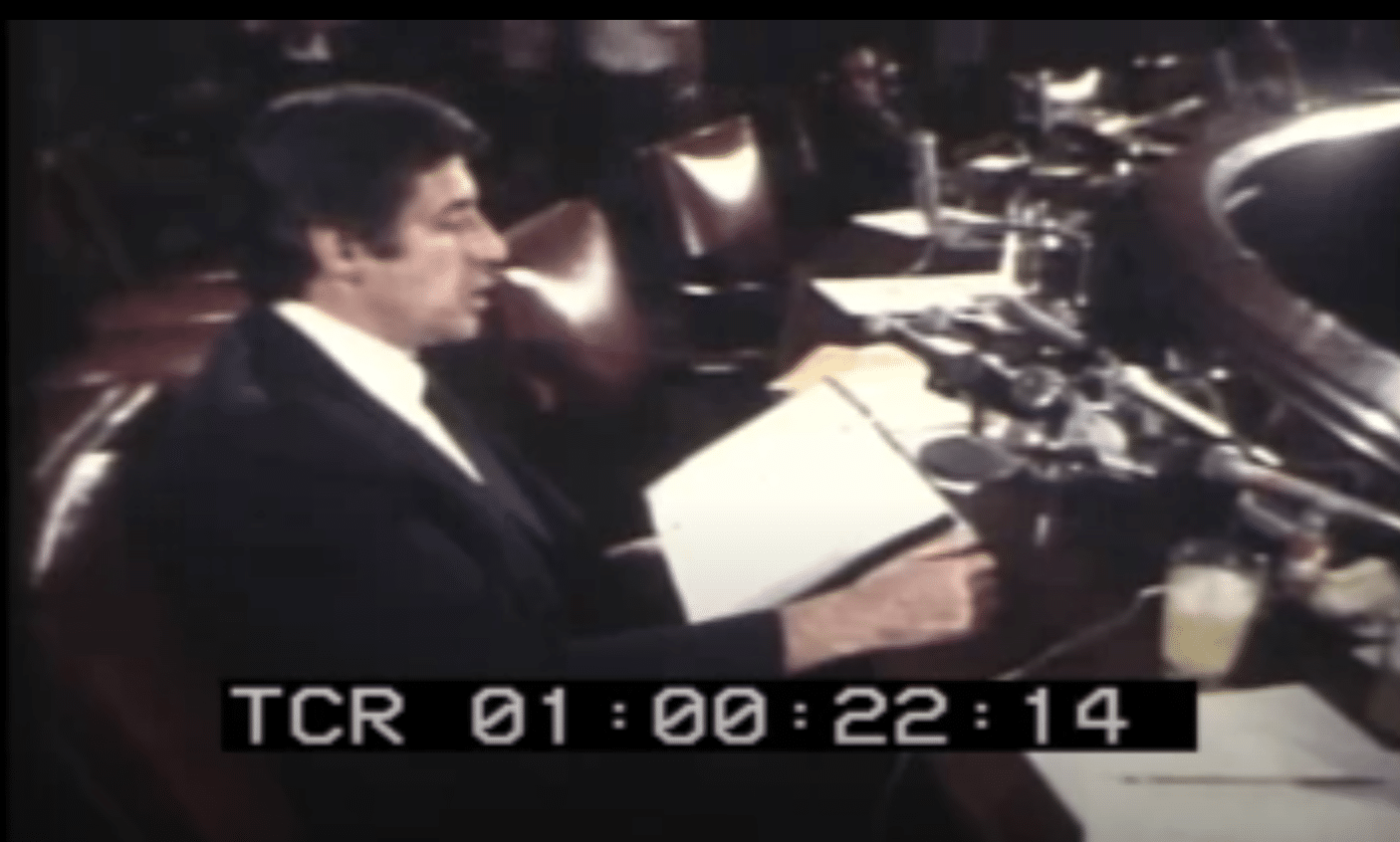
The case involved a grand jury investigation of U.S. Sen. Mike Gravel of Alaska and one of his aides. Gravel had obtained a copy of the top-secret Pentagon Papers, which had described the history of U.S. intervention in Vietnam. He read some of it before the Subcommittee on Buildings and Grounds of the Senate Public Works Committee and entered it into the Congressional Record.
Gravel and his aide, Leonard Rodberg, subsequently worked to have the papers published by Beacon Press. Both invoked the speech and debate clause to stop the grand jury query into how they had gotten the papers and what plans they had for publishing them.
The U.S. district court had denied this motion, but limited questioning of the aide. The U.S. Court of Appeals affirmed the denial but ruled that the congressional aide could not be questioned for legislative acts, although it did not classify private publication of the Pentagon Papers to be such.
5-4 ruling expanded clause to congressional aides
Justice Byron White wrote the decision for the 5-4 majority of Supreme Court, which was announced by Justice Harry Blackmun.
Observing that the Constitution did not intend to exempt members of Congress from criminal prosecutions, White observed that it did intend to “assure a co-equal branch of the government wide freedom of speech, debate and deliberation.” Senator Gravel could not therefore be questioned “to answer either in terms of questions or in terms of defending himself from prosecution — for the events that occurred at the subcommittee meeting.”
White further thought that his immunity extended to congressional aides like Rodberg. He reasoned that they must be treated as legislators’ “alter egos” and share in their constitutional immunity for legislative acts.
Legislative vs. non-legislative acts
The majority opinion, however, distinguished between legislative and non-legislative acts. Because the court majority did not believe that private publication of the Pentagon Papers was a legislative act, they ruled that the speech and debate clause did not prevent inquiry into this.
Justices Potter Stewart, William O. Douglas and William Brennan each filed partial dissents on the basis that the majority had taken too narrow a view of the speech and debate clause and its underlying purpose.
Stewart did not think that members of Congress should be questioned by grand juries about their sources of information and did not believe the issue had been adequately argued for the Court to draw such a conclusion. He further feared that the decision would have a chilling effect on legislative investigations.
Justice Douglas thought that that the right of members of Congress to inform their constituents was part of their legislative function. Citing Thomas Jefferson and other Founders, Justice Brennan also argued that the majority had taken too cramped a view of the legislative function.
Recent developments
In January of 2026, U.S. Senator Mark Kelly of Arizona invoked the speech and debate clause in seeking to keep U.S. officials from censuring him and threatening to reduce his military pension for a video in which he had participated telling troops that they had the right to disobey unlawful orders.
John R. Vile is a political science professor and dean of the Honors College at Middle Tennessee State University.