
Can words be violence? It’s an intriguing question.
There’s the “sticks and stones may break my bones, but words will never hurt me” school that insists that words alone cannot harm. On the other hand, threatening to murder someone is clearly a violent act—even if no weapon is involved. Putting someone in fear for his or her safety can be prosecuted as an assault even if no battery follows. Threatening the president will get you prison time.
Unfortunately, the Foundation for Individual Rights and Expression, a First Amendment advocacy group, sees no possible nuance in the question, which was included in one of its recent surveys of college students.
FIRE issued a press statement based on just that single question, headlined “90% of undergrads believe words can be violence.”
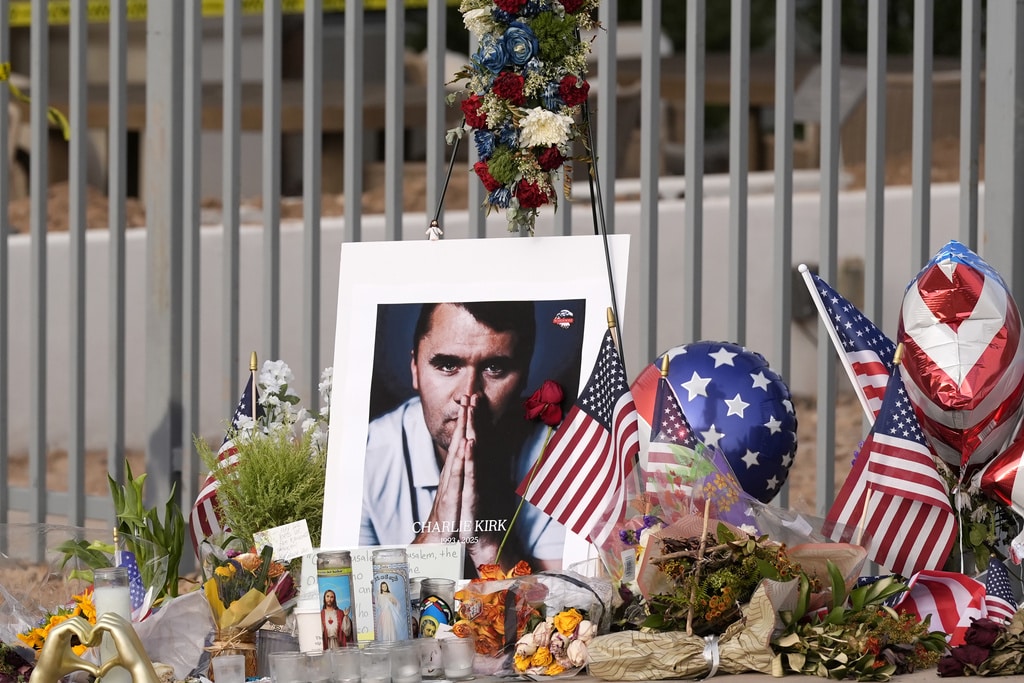
“Even after the murder of Charlie Kirk at a speaking event, college students think that someone’s words can be a threat,” said FIRE’s chief research advisor, Sean Stevens. “This is antithetical to a free and open society, where words are the best alternative to political violence.”
Let’s do the math. There are at least 15 million undergrad students in the United States. That means FIRE just painted 13.5 million students as clueless and insensitive on the basis of a single survey question without clarity or context.
Joshua Arnold of the Washington Stand, the conservative Family Research Council’s news site, quickly identified the flaw in FIRE’s query.
“It’s possible that many undergraduate survey respondents could be confused by the survey question as well,” Arnold noted. “It’s even possible that many students overthought the rather vague question, reasoning that words can indeed be considered violence in limited contexts (such as threats, or when they are calculated to induce panic). Perhaps the surprising answers were partly due to a poorly constructed question.”
The problem with shallow research that drives headlines is that it can also reinforce ill-founded stereotypes. Consider The Washington Post’s editorial after seeing FIRE’s press release:
“The reckoning over the dismal state of campus discourse continues,” the Post opined. “The idea that controversial opinions equal danger has been percolating for years on college campuses. Not only did this misguided view teach students to shun difficult conversations, but it also created an environment ripe for politicization, calls for cancellation and rank hypocrisy.”
FIRE is a genuine champion of the First Amendment and does good and important work. The Washington Post editorial page has historically been a voice for justice. Surely both recognize that the greatest pressure on free speech on college campuses is external. It’s this kind of unjustified accusation that emboldens government to censor, interfere with curriculum and cut funding.
For the record, FIRE’s bold statement that 90 percent of students believe words can be violence has a very soft foundation. Just 22 percent say that the sentence “Words can be violence” describes their thoughts completely.
Then comes the gradation: 25 percent say they “mostly agree,” 28 percent say they “somewhat agree,” 15 percent “slightly agree,” with nine percent saying “not at all.” Clearly students were applying critical thinking here, seeing that the answer to the question is really not yes or no.
If FIRE seeks to know whether some students equate hateful speech, insulting language or racial slurs with actual physical violence, then that’s the series of questions that need to be asked. It’s an important topic that demands context and clarity.
There are almost 4,000 colleges in the U.S., and at most of them the discourse is reasonably healthy and not the “dismal” wasteland the Post claims it to be. But acknowledging that very normal educational reality, particularly at non-elite state schools far from the coasts, doesn’t score political points, sell books or drive fundraising.
This portrayal of colleges as a danger to free speech is called out in Terms of Respect: How Colleges Get Free Speech Right, a new book by Princeton University President Christopher Eisgruber, who concludes that “today’s young people are not so different from those of preceding generations.
“They value free speech and want exposure to diverse viewpoints, though they sometimes misunderstand what these ideals entail and struggle how to apply them in difficult circumstances,” Eisgruber wrote. “When it comes to getting free speech right, colleges and America’s young people deserve higher marks than they get.”
As a former dean at Middle Tennessee State University and a frequent visitor to colleges across America, I’ve seen little change on America’s campuses that isn’t also a direct reflection of what’s happening in every community in the nation. There’s more polarization and less constructive conversation, but that’s not about campuses. It’s about all of us.
Easy answers beget easy outrage, and both undermine our most fundamental freedoms of expression.
Ken Paulson is director of the Free Speech Center at Middle Tennessee State University and a volunteer member of FIRE’s legal advisory board.