
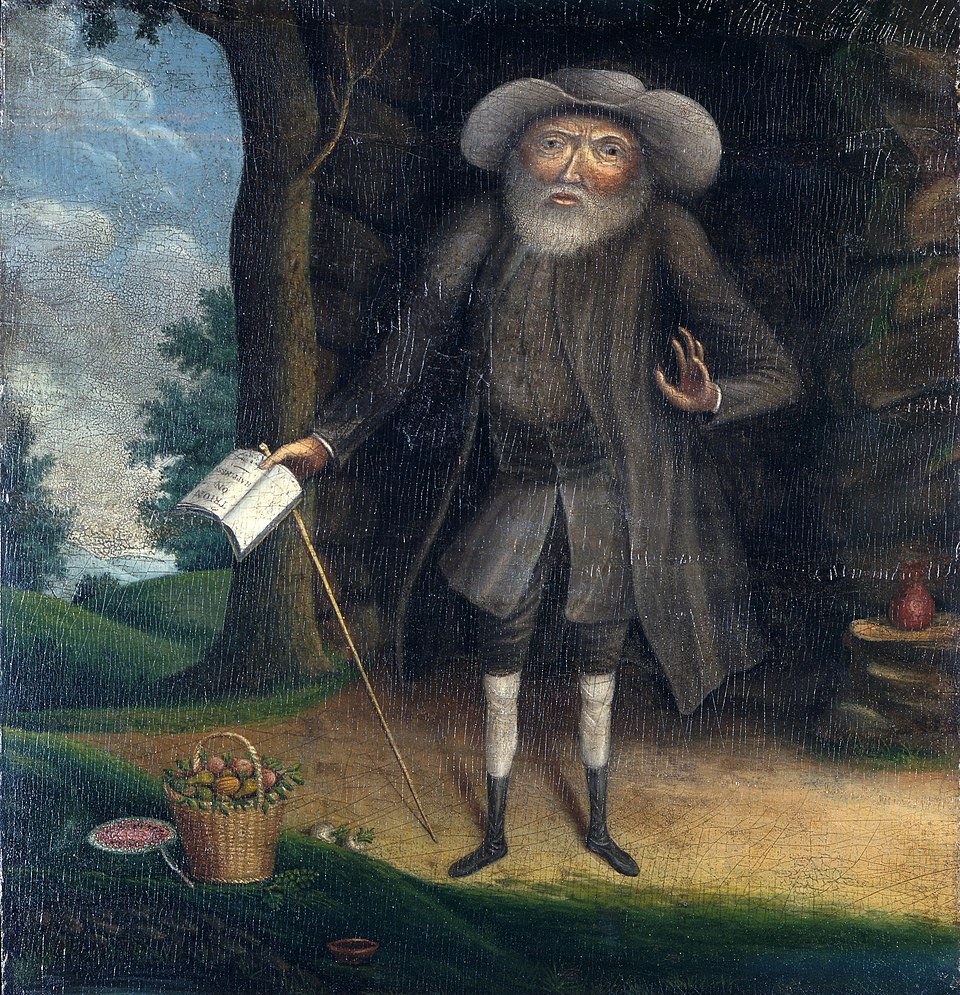
One of the factors that made the American Revolution possible was the existence of fairly robust debate years before the nation adopted the U.S. Constitution or the Bill of Rights. In some cases, Americans exercised greater rights in America than they had in England.
The Peter Zenger case of 1735 had, for example, allowed for truth as a defense in libel cases, despite English case law to the contrary. Newspapers flourished. Dissenting religious groups, including Quakers, received far greater freedom in many of the American colonies, especially in Pennsylvania, than they had in England.
Benjamin Lay became an outspoken Quaker against slavery
Benjamin Lay (1682-1759) was one of the most colorful Quaker figures. Born in Essex England, Lay was a little person of just over 4 feet tall and was married to another little person who was also a Quaker.
In addition to other occupations, Lay had spent 12 years aboard ships where he had been exposed to the horrors of slavery. He and his wife were further radicalized when they spent 18 months in Barbados, where most of the population consisted of slaves. They subsequently moved to Philadelphia, where Lay became one of the most outspoken opponents of slavery and argued for its immediate abolition, a position later taken by William Lloyd Garrison.
Speech as Performative Art
His actions often crossed the line between civil discourse and performative art, as when he lay in the doorway of a Quaker meeting house after being expelled and forced people to walk over him. In even more dramatic fashion during a Quaker meeting, he stabbed a book that looked like a Bible in which he had placed a pig bladder filled with red pokeberry juice that looked like blood. In another instance, he raised fears of a family whose son he held so that they would understand how slave families felt when they were separated. In similar fashion, he stood barefooted in the snow outside a Friends meeting to underline the fact that many slaves had been ill clothed.
After his wife died, Lay moved into a cave with his books and limited himself to a vegetarian diet and in front of which his only known portrait was made.
Early Anti-Slavery Publication
As eccentric as he was, Lay gained favor with Dr. Benjamin Rush, a physician who signed the Declaration of Independence. He was also admired by Benjamin Franklin, who published his discursive diatribe accusing those who held slaves of being apostates from Christianity. The shortened titled was All Slave-Keepers That Keep the Innocent in Bondage, Apostates.
In time, the Quakers became one of the first religious organizations to take a stance against slavery that was later reflected in abolitionist writings and that led to the Civil War and slave emancipation.
John R. Vile is a political science professor and dean of the Honors College at Middle Tennessee State University.